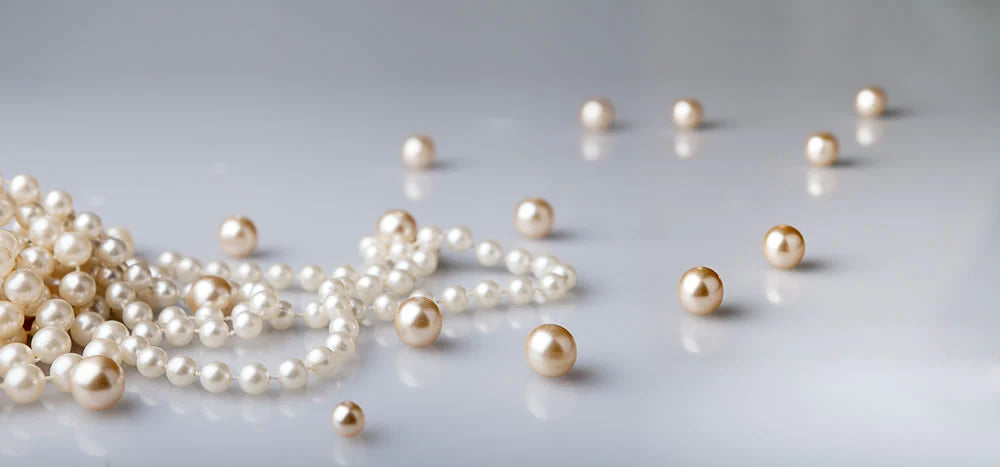
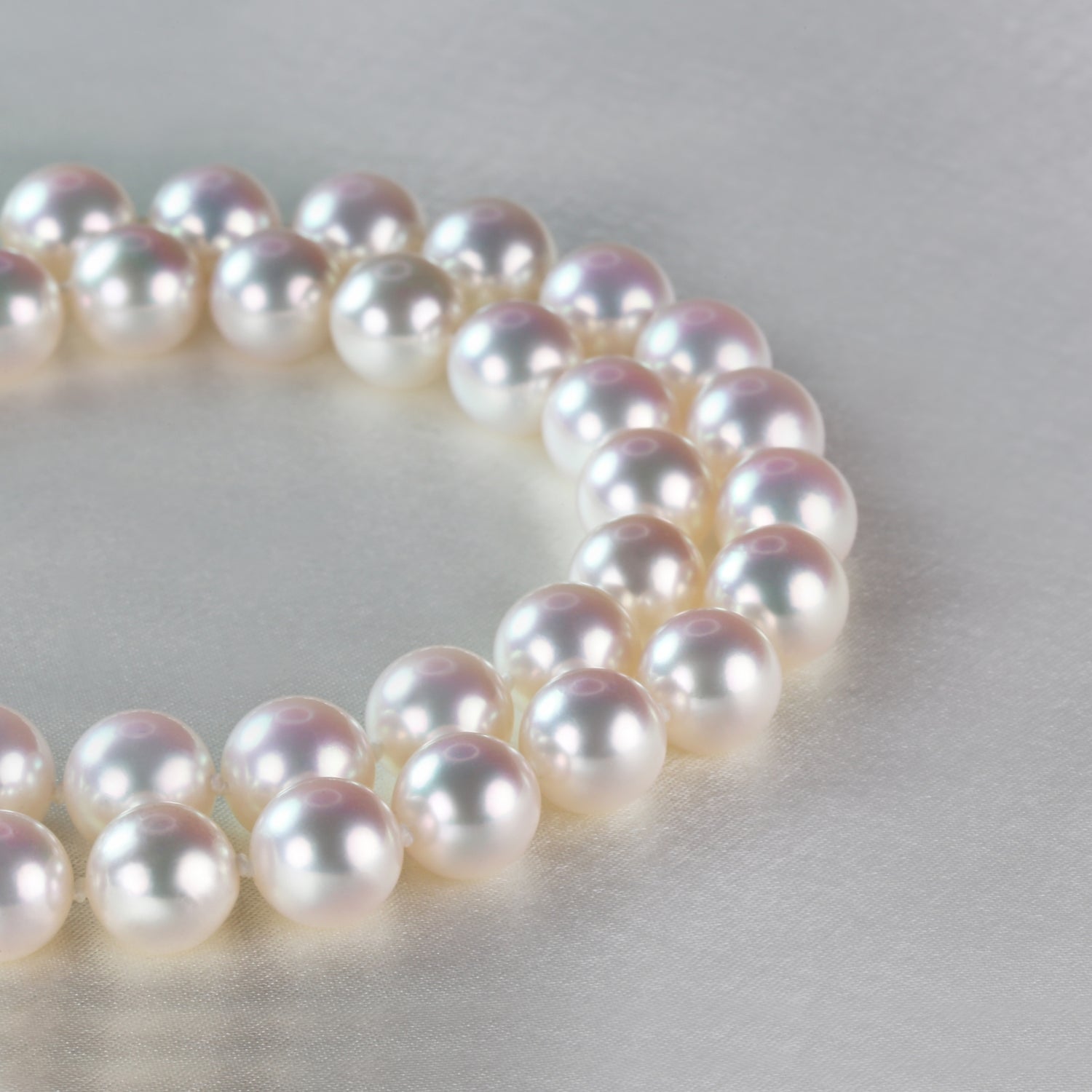
Akoya pearls are saltwater cultured pearls produced by the Akoya oyster (Pinctada fucata martensii). Akoya pearls are considered the classic choice for necklaces and other pearl jewelry because of their perfectly round shape, bright, mirror-like luster, and neutral colors. Preferred by most retailers and consumers, they are the quintessential classic pearl.
Currently, akoya pearls are cultivated in Japan, China, and to a lesser extent, Vietnam, Thailand, and Australia. The vast majority of the world's akoya pearls are produced in Japan, making it the undisputed center of akoya pearl production. China was once a strong competitor, but a natural disaster in 2007 nearly destroyed its akoya pearl industry.
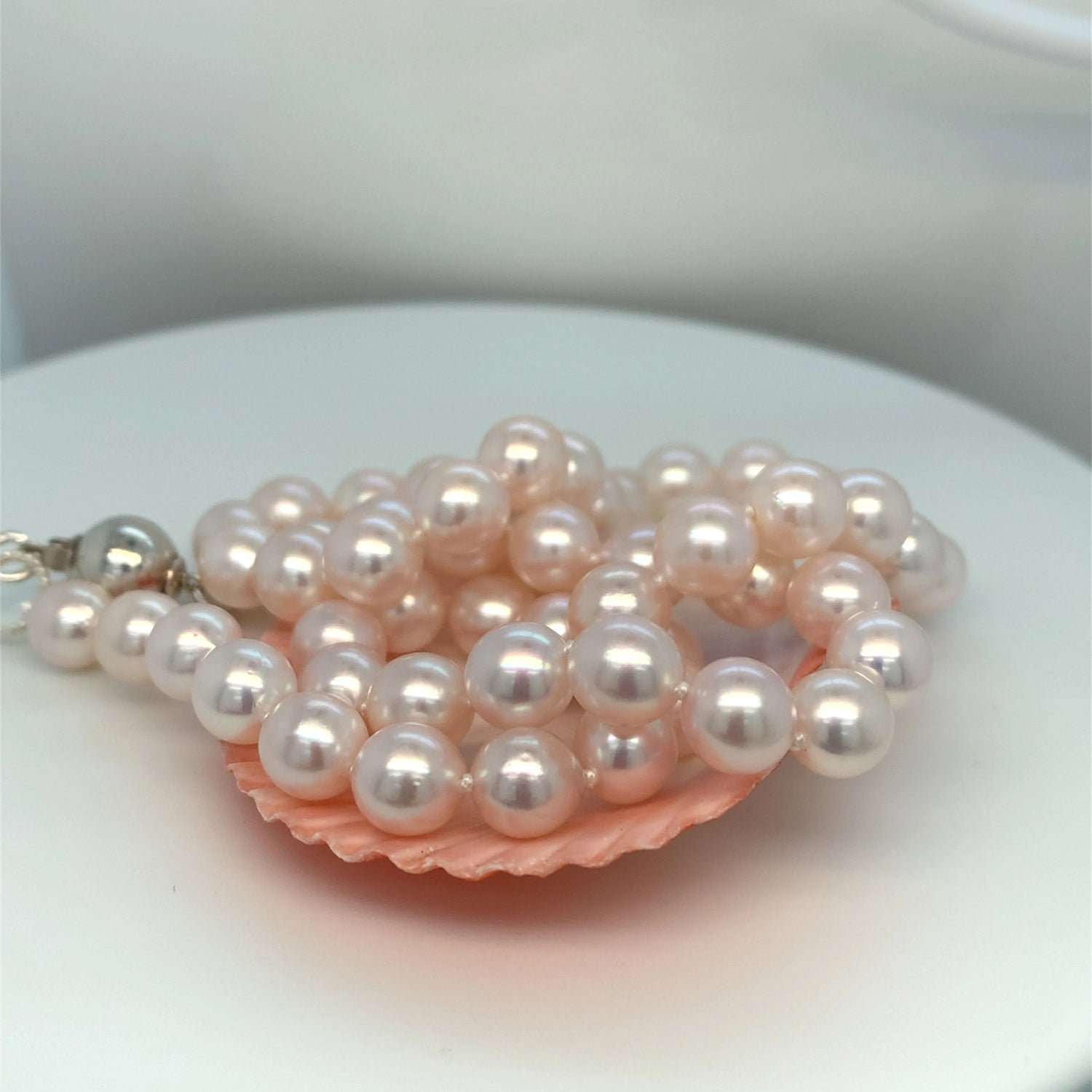
An interesting fact about Akoya pearls is that the Akoya pearl oyster is currently the smallest commercially farmed pearl-producing oyster. The average size of an Akoya pearl is only 7mm, whereas the average size of a South Sea pearl is around 12mm. Currently, Akoya pearls range in size from 1mm to a very rare 10-11mm. Akoya pearls themselves are round, but each harvest yields a certain percentage of baroque pearls and keshi pearls, which typically have the bright luster characteristic of Akoya pearls but with shapes and appearances closer to freshwater pearls or baroque South Sea pearls. Akoya pearls, unless dyed, are neutral in color and hue. Most pearls are white to gray, with pink, green, or silver overtones. Occasionally, blue Akoya pearls with silver and pink overtones also appear, but these colors are extremely rare. Akoya pearls are naturally never black—black Akoya pearls have either been treated with cobalt-60 radiation or organic dyes.