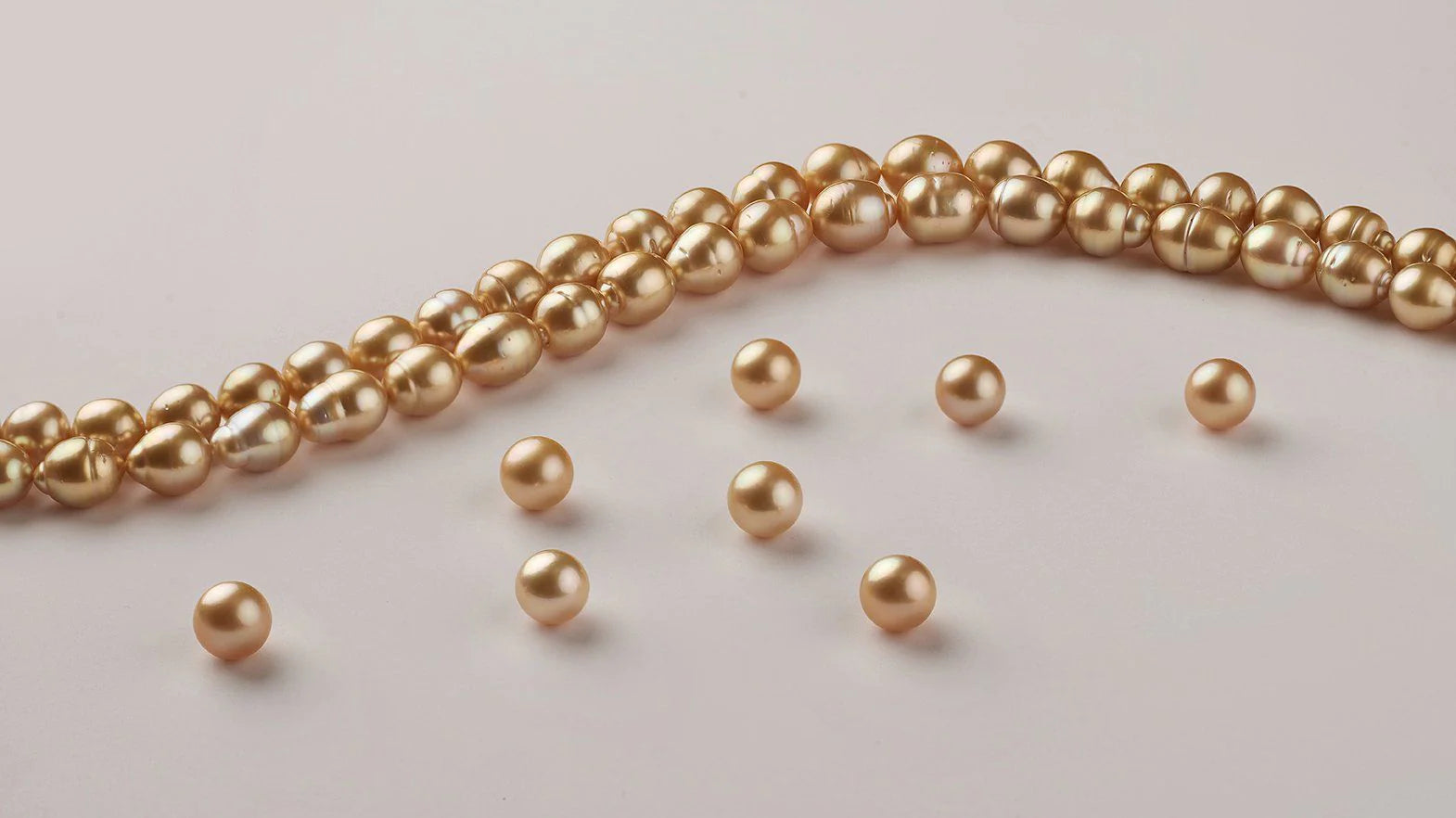
South Sea pearls' large size, limited cultivation areas, and long growth periods all contribute to their status as the rarest of all pearl types. Their colors range from pristine white to deep honey gold, making them highly sought after by collectors and designers. Whether white or golden, South Sea pearls possess a soft, luxurious luster. Only a small percentage of South Sea pearls are perfectly round, making a full strand of similarly sized South Sea pearls extremely rare.
Most white South Sea pearls are produced off the Northwest coast of Australia. Golden South Sea pearls are also primarily found in the Philippines and Indonesia—two countries that are quickly becoming the top producers of gem-grade golden South Sea pearls.
While white South Sea pearls are primarily produced in Australia, golden South Sea pearls are now mainly produced in the Philippines and Indonesia, with Australia accounting for a small portion of production. However, golden South Sea pearls are typically auctioned in conjunction with white South Sea pearl producers, and many auctions will contain both white and golden South Sea pearls. These auctions are held several times a year in Japan and Hong Kong.
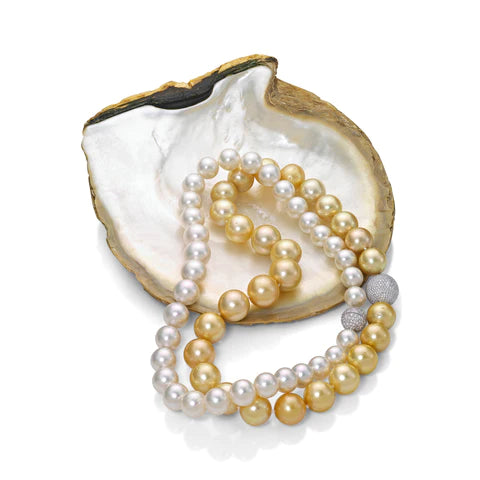
South Sea pearls typically range in size from 8 to 20 millimeters, with an average size of 12 millimeters. While extremely rare, pearls larger than 20 millimeters have been found. Silver-lipped South Sea oysters usually produce white, silver, aqua, and blue-toned pearls. Gold-lipped South Sea oysters produce cream, champagne, and darker golden pearls. The colors produced by gold-lipped South Sea oysters range from milky white to deep gold, with shades in between often referred to as yellow and champagne. Each color has its own beauty, but the most prized is gold. Because the natural colors of South Sea pearls are already incredibly rich and beautiful, after harvesting, they only need to be cleaned and polished to remove residue and reveal their natural luster.